VentureScope
From Reports to Workflow: Sharing, Exploring, and Acting on Diligence
Startup diligence generates reports. But in practice, the work does not end when a report is ready. Founders need to share context with investors. Investors need to review, discuss, and align with teammates. Both sides need a way to ask follow-up questions when something is unclear.
This update describes how VentureScope has expanded from diligence report generation into a more collaborative diligence workflow, along with a look at the individual capabilities that support that shift.
The Problem: Fragmented Information Flow
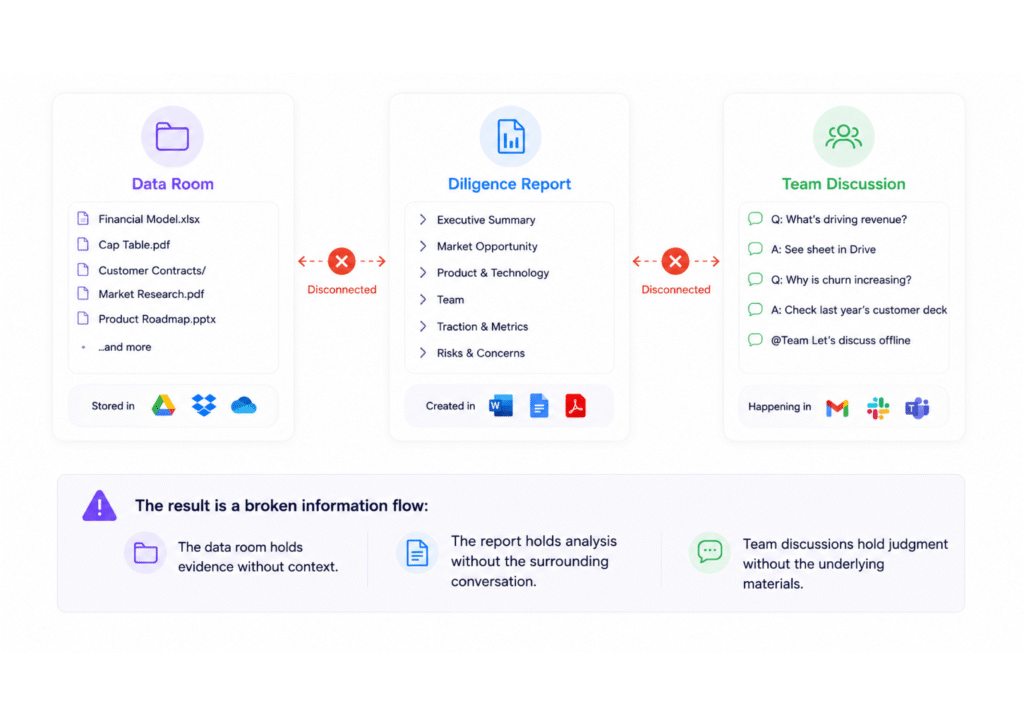
Figure 1a. A common pattern: data, reports, and team discussion remain isolated from one another.
In many diligence processes, information ends up split across different tools and contexts. A founder may spread pitch materials, financials, and data room documents across multiple folders and links. An investor may take notes, ask questions, and share findings across email, messages, and internal documents.
The result is a broken information flow: the data room holds evidence without context, the report holds analysis without the surrounding conversation, and team discussions hold judgment without the underlying materials.
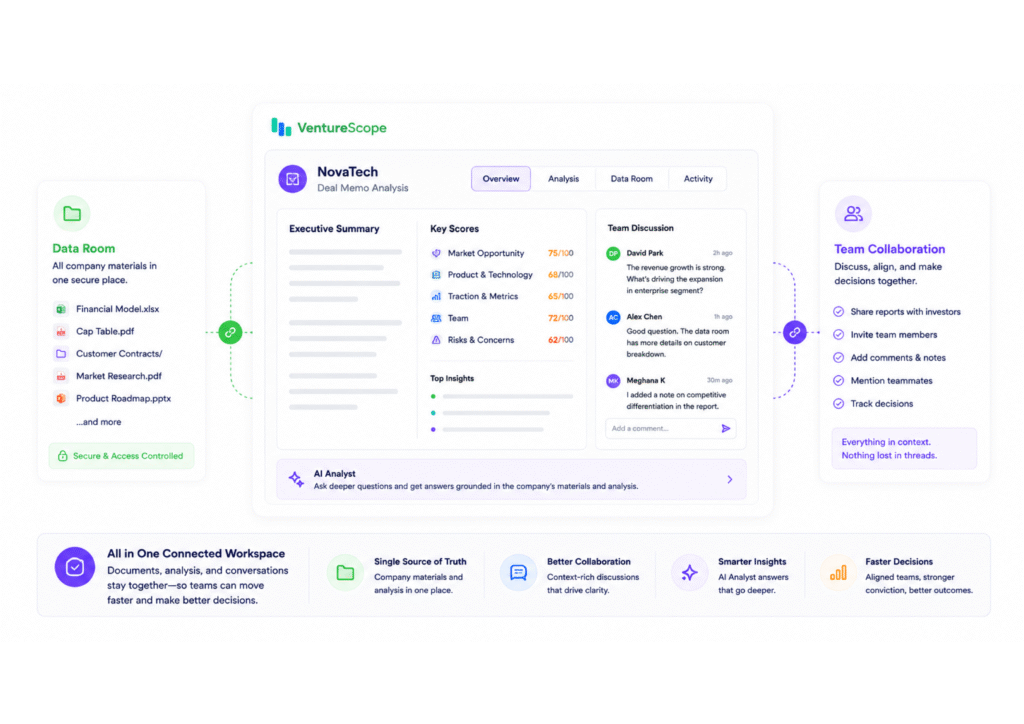
Figure 1b. VentureScope connects documents, analysis, and team collaboration in one place.
VentureScope addresses this by providing a workspace that connects document sharing, structured analysis, and collaborative review, rather than treating each as a separate step.
A Typical Workflow
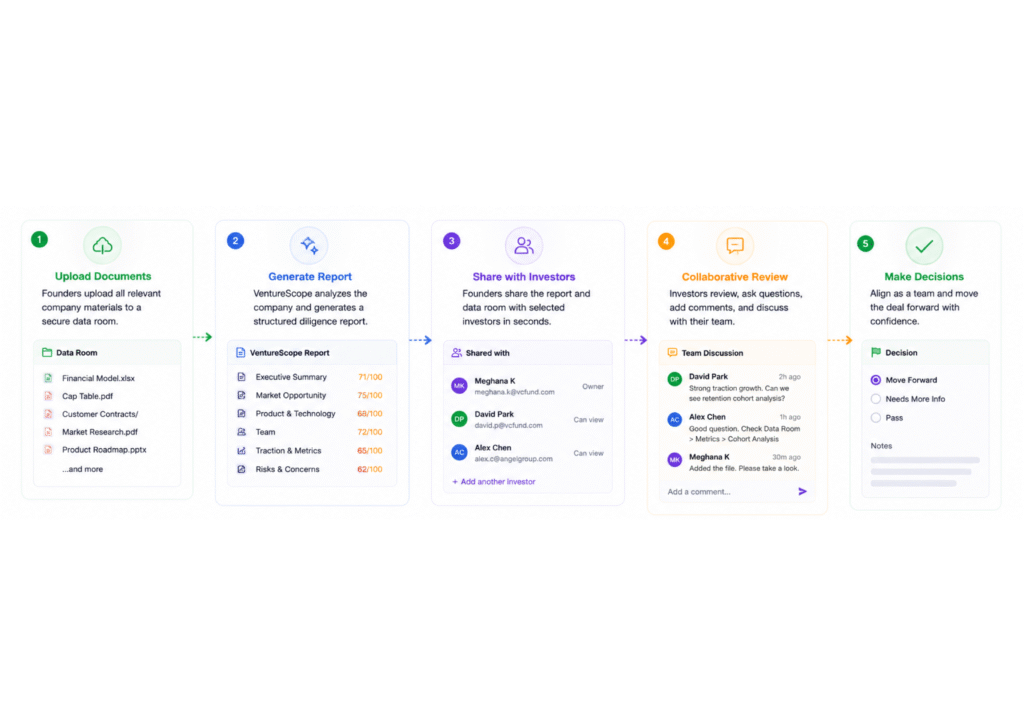
Figure 2. How a deal typically moves through the VentureScope workflow.
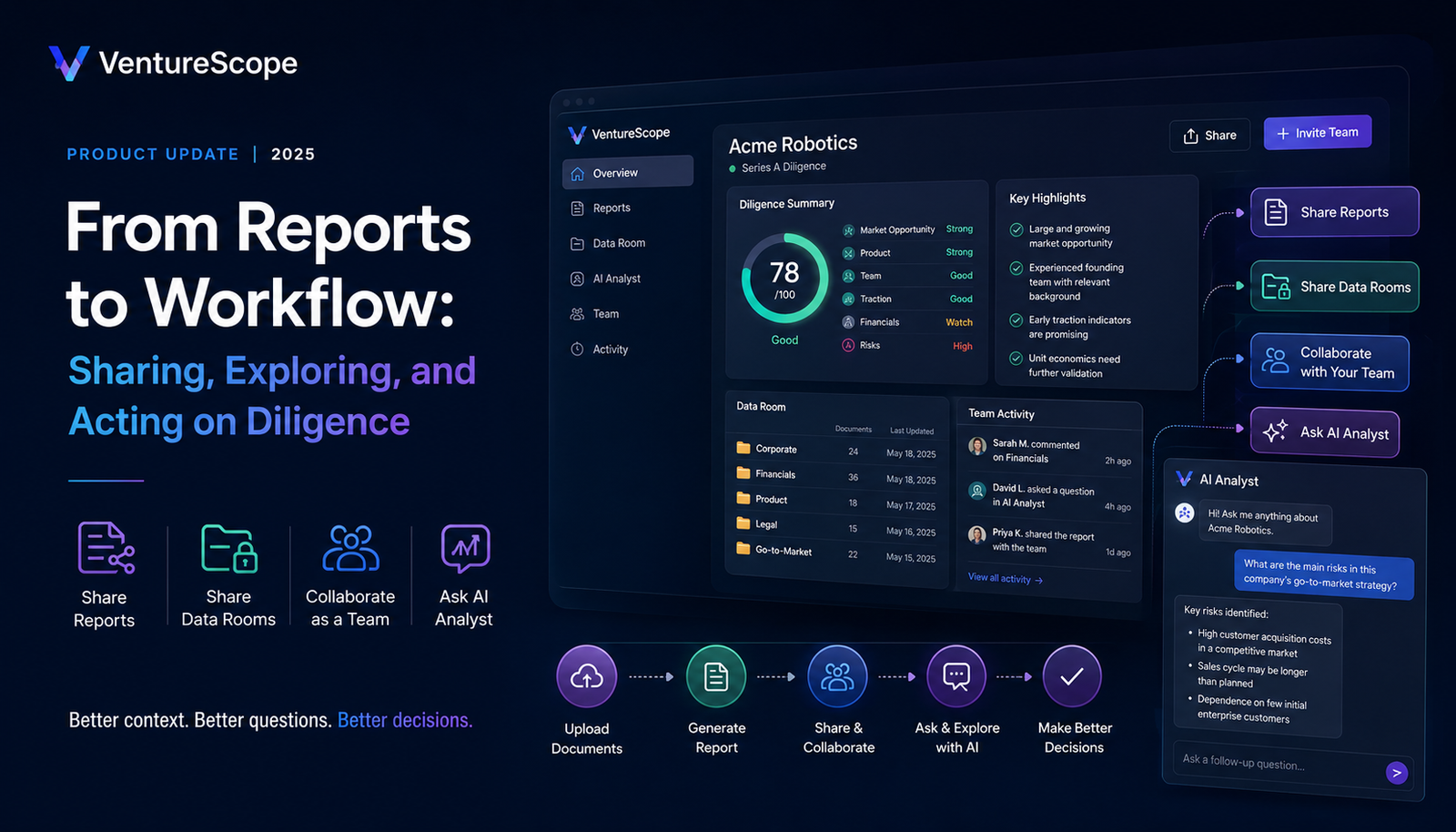
The workflow moves from document upload through report generation, investor sharing, collaborative review, and a decision point. Each step builds on the previous one, reducing the need to switch between separate tools.
Key Capabilities
1. Report Sharing for Founders
Founders can share VentureScope diligence reports directly with investors. This gives investors a structured view of the company at the start of the conversation, including key findings, risks, and areas that may warrant follow-up.
The intent is not to replace investor judgment or founder storytelling, but to establish a clearer common starting point for the diligence conversation.
2. Data Room Sharing
Founders can also share data rooms through VentureScope. Data rooms are essential to fundraising, but can be difficult to navigate without enough structure. VentureScope allows founders to provide both the underlying documents and a structured analysis layer alongside them.
This helps bridge the gap between receiving documents and understanding what they mean in context.
3. Investor Team Collaboration
Investment decisions typically involve multiple stakeholders, including associates, partners, investment committees, and external collaborators. When diligence findings are isolated to a single inbox or account, alignment across the team becomes harder.
VentureScope allows investors to share startup reports with teammates. This supports a shared review of the same analysis, making it easier to discuss risks and opportunities with full context available to everyone.
4. AI Analyst
A diligence report surfaces initial findings, but real evaluation often generates follow-up questions. AI Analyst allows founders and investors to ask deeper, company-specific questions grounded in the uploaded materials and VentureScope’s analysis.
Example questions:
- What are the main risks in this company’s go-to-market strategy?
- What does the data room indicate about the team’s execution history?
- Does the current traction support the valuation implied by this round?
- What should this founder clarify before investor meetings?
AI Analyst shifts diligence from a static document to an interactive exploration.
Feature Overview
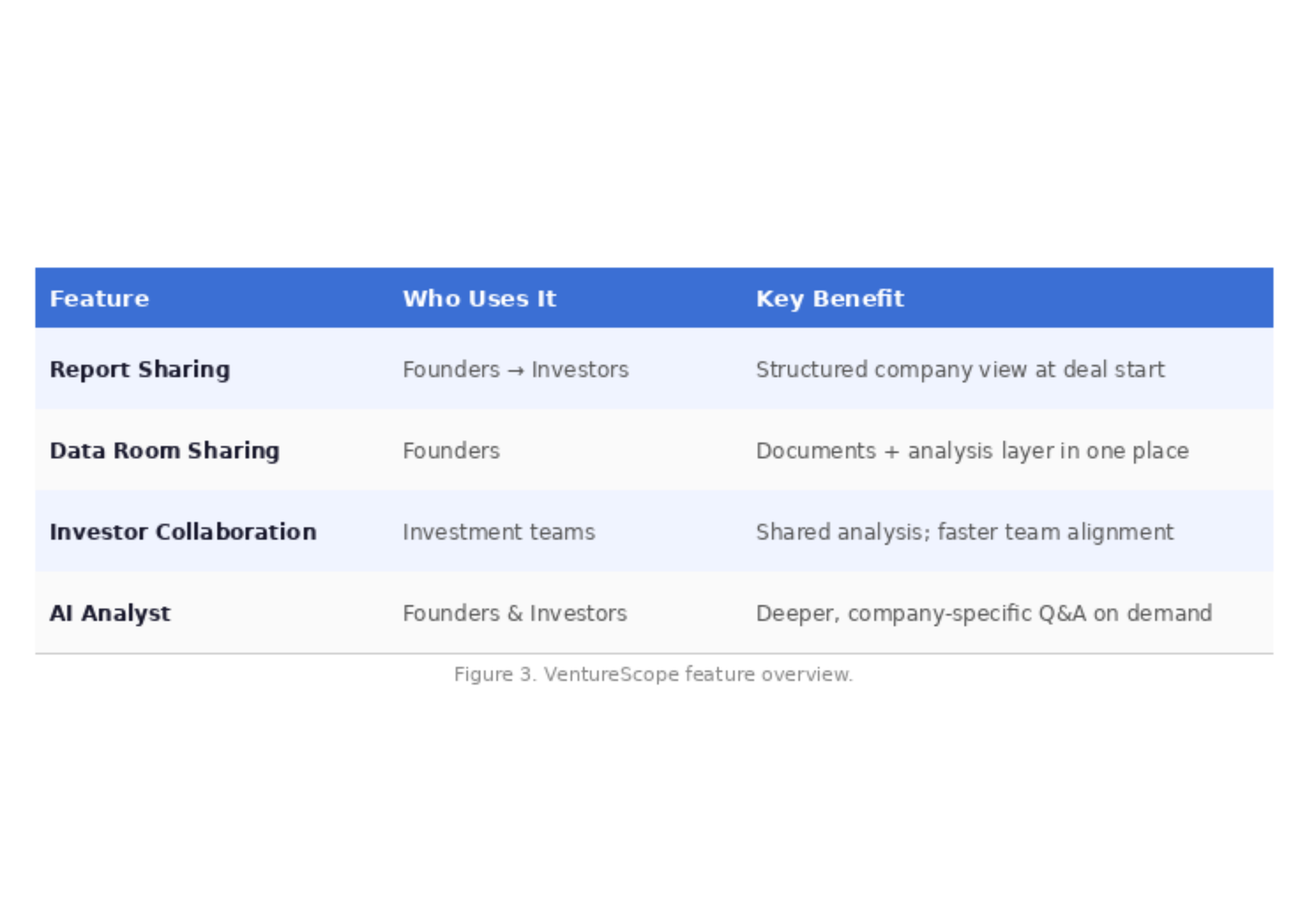
Figure 3. Summary of VentureScope’s core features, primary users, and benefits.
Direction
These capabilities reflect a broader design goal: moving diligence from a one-time report to a connected process that supports sharing, exploration, discussion, and decision-making.
For founders, that means a clearer way to present the company and support investor conversations. For investors, that means a more efficient way to review opportunities, align with colleagues, and go deeper when the details matter.
Better context. Better questions. Better decisions.