SOWFIN · FOUNDER RESOURCE
By Ishtiaque Mohammed, Co-Founder & Managing Partner, SowFin
Topics: VC Due Diligence · Startup Funding · Early-Stage Strategy
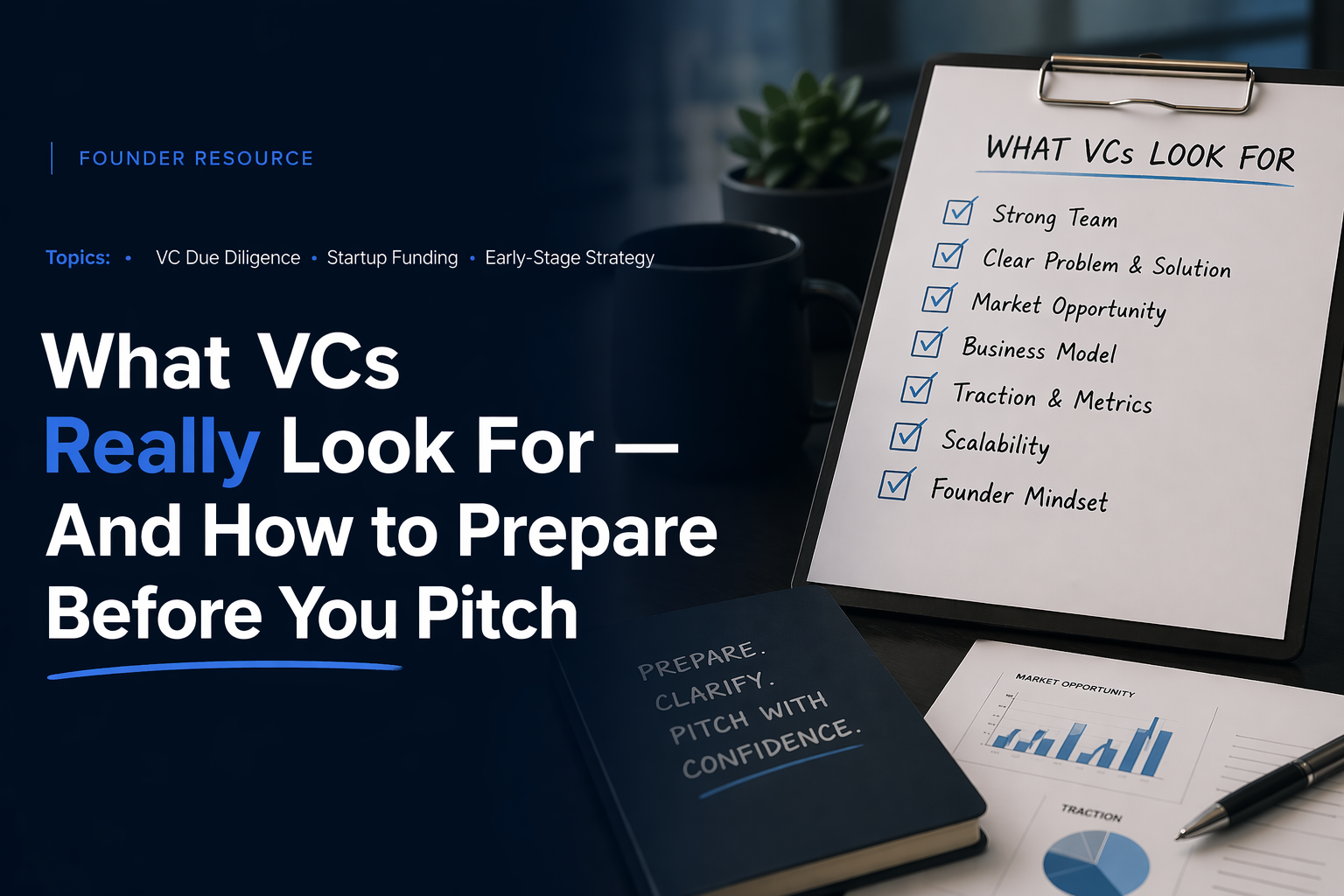
What VCs Really Look For — And How to Prepare Before You Pitch
A candid breakdown of how investors evaluate startups, the most common failure points founders miss, and how to walk into your next pitch fully prepared.
I’ve been on both sides of the table — as a founder grinding through the uncertainty of early-stage building, and as an investor assessing hundreds of startups. One thing that strikes me every time: the gap between what founders think VCs care about, and what VCs actually care about, is enormous.
This post is an attempt to close that gap. It’s based on a live session I ran with a cohort of early-stage founders, where I walked through our internal due diligence framework — the same lens we use at SowFin to evaluate every company we consider. My hope is that by understanding how investors think, you can spend less time guessing and more time building the case that gets you funded.
It Always Starts With the Founding Team
In VC, there’s a phrase: bet the jockey, not the horse. The idea is simple — a great team can navigate a flawed market or pivot a failing product. A weak team will squander even the best opportunity.
Before I look at a single financial metric, I want to understand the people building the company. Specifically: do they have the resilience, commitment, and self-awareness to survive what’s coming? The founder journey is a lonely one. It demands an unusual combination of conviction and flexibility being stubborn about the vision while staying open to what the market is telling you.
Beyond raw determination, I’m also trying to understand your psychology. What led you to this specific problem? Why are you, of all people, the most important person to solve it? These aren’t rhetorical questions they’re diagnostic. The best founders have a deeply personal, compelling answer.
It Always Starts With the Founding Team
Once the founding team clears the bar, we move to fundamentals. Three questions dominate this stage:
- Is the market growing?— We’re not interested in a large static market. We want to see a market that’s expanding — where a rising tide will lift your company even if execution isn’t perfect early on.
- Is the product clearly positioned?— Positioning tells us whether you understand your customer, your competition, and your differentiated value. Vague positioning is a red flag.
- Have you thought seriously about monetization?— A brilliant product with no viable revenue model is a liability, not an asset. We want to see that you’ve wrestled with the business model not just the technology.
Show Us Your Receipts
Traction is the single most powerful thing you can bring to a VC conversation. I call it your “receipts” concrete evidence that the market is responding to what you’re building.
A common misconception is that receipts only count if you have paying customers. That’s not true especially at the earliest stages. Here’s how I think about traction by stage:
"All receipts are good receipts. If the market is responding to you across multiple verticals — that's not a problem to hide. That's a story to tell."
Why Startups Fail (The Honest List)
After working with hundreds of founders, the failure patterns are remarkably consistent. Understanding them is the first step to avoiding them.
1. Founder Misalignment
This is the number one reason startups fail — and the one most founders least expect to affect them. Disagreements over equity, roles, vision, and decision-making authority can tear apart even a technically strong team. Get aligned early, in writing, before the stress hits.
2. Building in Isolation
Product-market fit requires obsessive customer contact — before you build, while you build, and after you ship. The founders who get this right operate on an “outside-in” principle: what do customers think is a great product, not what do I think is a great product. Talk to as many customers as possible before writing a single line of code.
3. Strategic Rigidity
The market will send you signals. Some of them will challenge your assumptions. Founders who refuse to make even minor pivots in response to clear market feedback tend to build toward a wall. Conviction is a virtue; dogmatism is a liability.
4. Poor Communication with Investors
You’ve worked hard to create traction. Don’t let disorganization undermine it. VCs want well-structured data rooms, clear cap tables, organized contracts, and a coherent narrative. Being difficult to diligence is a signal not just an inconvenience.
The Category Creator Question
One of the most interesting discussions from our recent founder session was around what I’d call the “category creator” positioning challenge. Several founders in the room are building in genuinely new spaces where comparable comps don’t exist and traditional industry multiples feel like a straitjacket.
My advice: don’t waste time trying to convince the wrong investor. The first job is to identify VCs who have enough domain understanding to appreciate what you’re building. A generalist VC benchmarking you against B2B SaaS multiples will never give you a fair valuation in a genuinely novel market.
For category creators, the conversation shifts from “here’s my ARR” to “here’s why this is a new category, here’s why now, and here’s why we are the team to own it.” Category creation is the highest-risk, highest-reward bet in venture and the right investor will know that.
When Is the Right Time to Raise?
This came up repeatedly in our session, and the answer is more nuanced than most founders expect. The short version: VC should be a last resort, not a first instinct.
Before approaching institutional investors, exhaust other options — bootstrapping, revenue contracts, friends and family. Not because VCs want to see that you’ve struggled, but because it demonstrates skin in the game and capital discipline.
The right moment to raise is when you have:
- Clear receipts and traction that validate your direction
- A specific, credible plan for how capital accelerates growth
- Competitive awareness — if the market is moving fast, waiting has a cost
- A coherent story about the multiplier effect of this round
If you can answer “what does this capital unlock?” with precision, you’re ready to pitch.
How Focus Beats FOMO Every Time
If there’s one strategic mistake I see constantly, it’s founders trying to address five markets at once because the technology genuinely could serve all of them. Resources are finite. Time is finite.
The startups that win are almost always the ones that go deep in one vertical first, prove it out completely, then expand. Hyper-focus is a competitive advantage, not a limitation. And when you do have traction in adjacent markets, present it — but wrap it in a cohesive strategy that shows you’re not thrashing.
It Always Starts With the Founding Team
See Your Startup Through a VC's Eyes — Before You Pitch
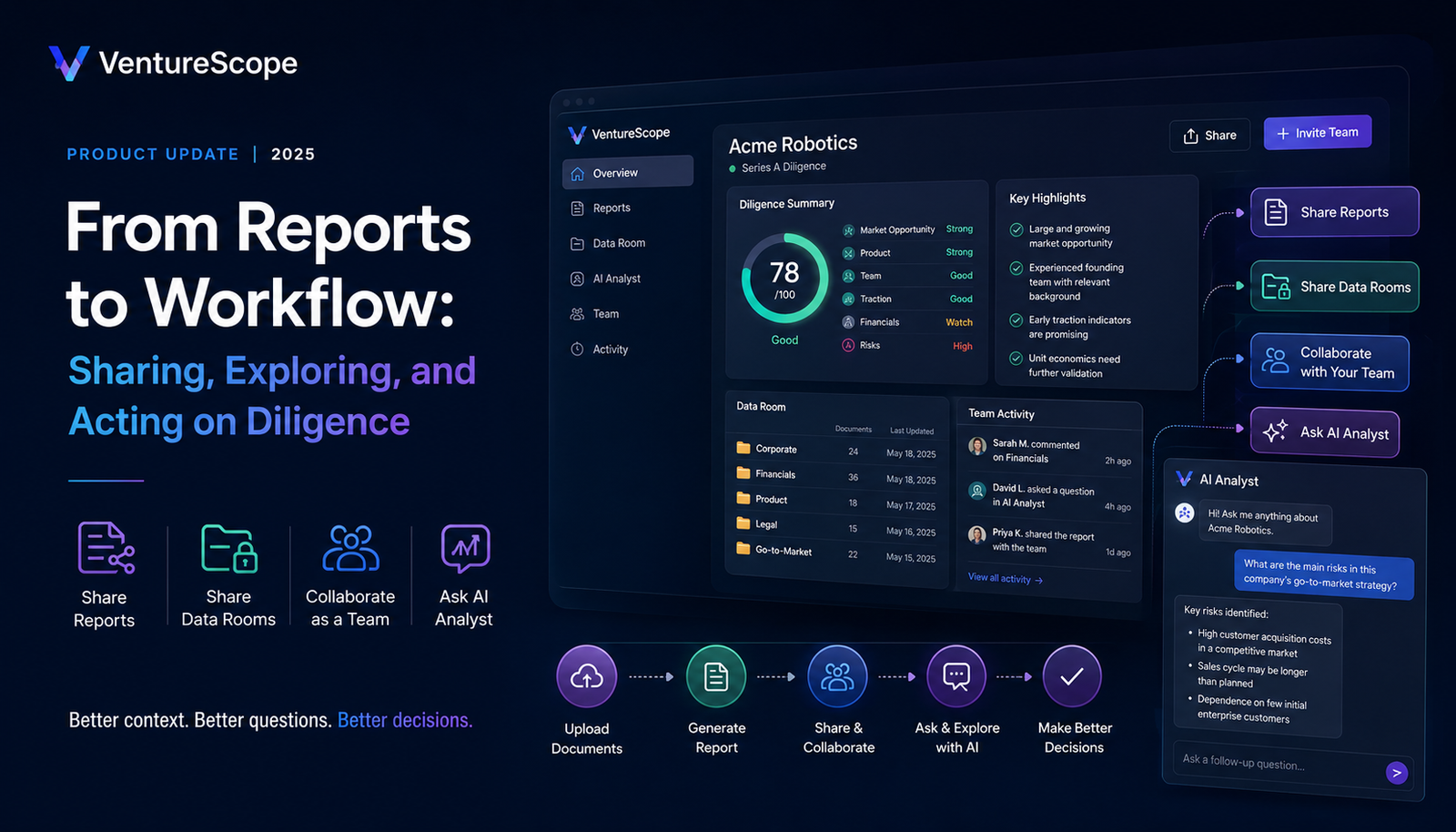
VentureScope was built to give founders exactly the kind of candid, structured analysis that most VCs will never share with you directly. Upload your pitch deck and data room documents, and our AI-powered platform scores your startup across every dimension investors actually evaluate — market positioning, team composition, competitive landscape, traction, and more.
You'll get a clear view of your gaps, a prioritized list of what to address, and — once you're ready — access to investor matching with VCs actively using the platform.
A Final Note to Founders
The funding journey is hard. It’s longer than you expect, more personal than you want it to be, and full of ambiguity. But it’s also a process you can prepare for systematically — and preparation is one of the few variables entirely in your control.
Know your receipts. Know your story. Know who the right investor is before you get in the room. And make sure the fundamentals your team alignment, your PMF clarity, your strategic discipline are solid enough to withstand hard questions.
At SowFin, our mission is to make that preparation accessible to every founder, not just those who already have the right network. VentureScope is one part of that a tool to give you the honest VC lens before the stakes are real.
If you’re building in the physical AI space and want to talk directly, reach out. We’d love to hear what you’re working on.
Ishtiaque Mohammed
Co-Founder & Managing Partner, SowFin